The Big Red Cars
 |
 |
 |
 |
 |
 |
 |
 |
 |
 |
 |
 |
 |
 |
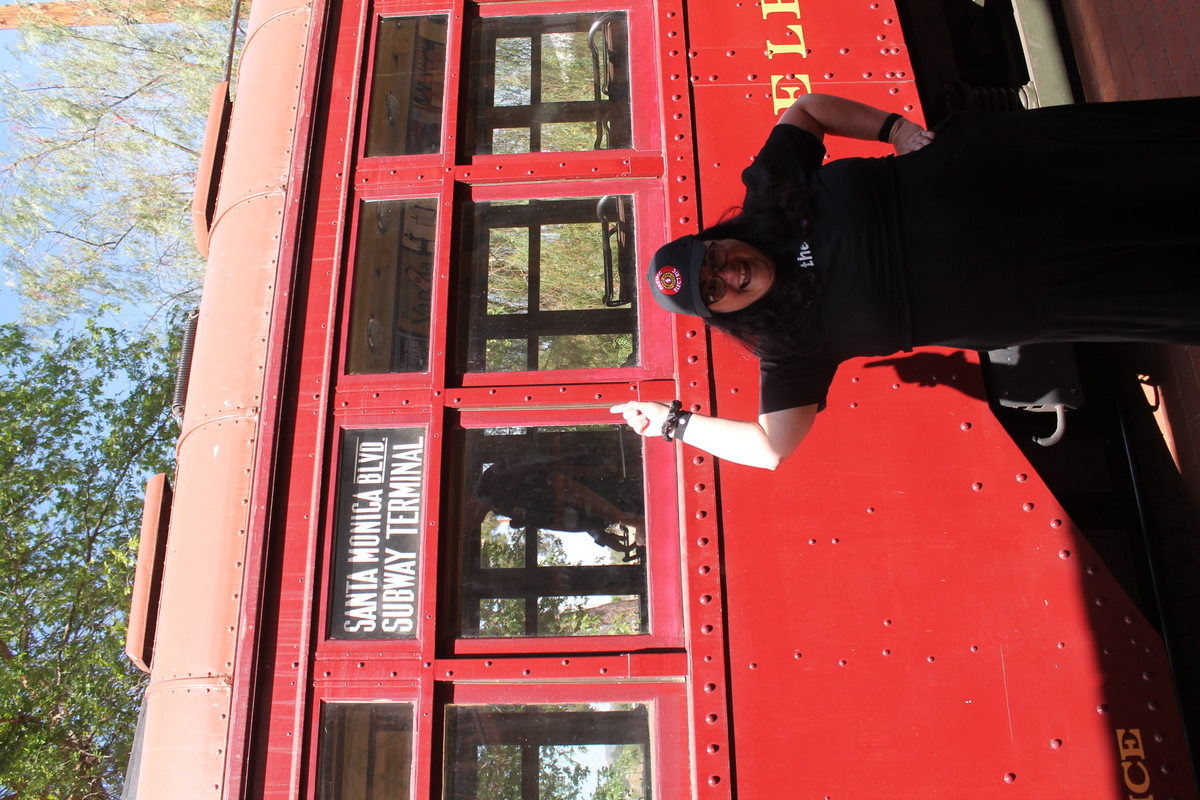
On Friday, I went to the Southern California Railway Museum in Perris. I’d been there once before, back in 1995, and I’d been thinking of going back again. When I looked at their web site, I saw the Run One Program, and I immediately thought of Sandi, who I met some years ago through Atlas Obscura. She likes to do unusual and obscure things. At first I guessed she’d already done this, since she finds ways to see and do lots of things. But when I asked her, she said she hadn’t done this yet. So I told her I thought we should go do it.
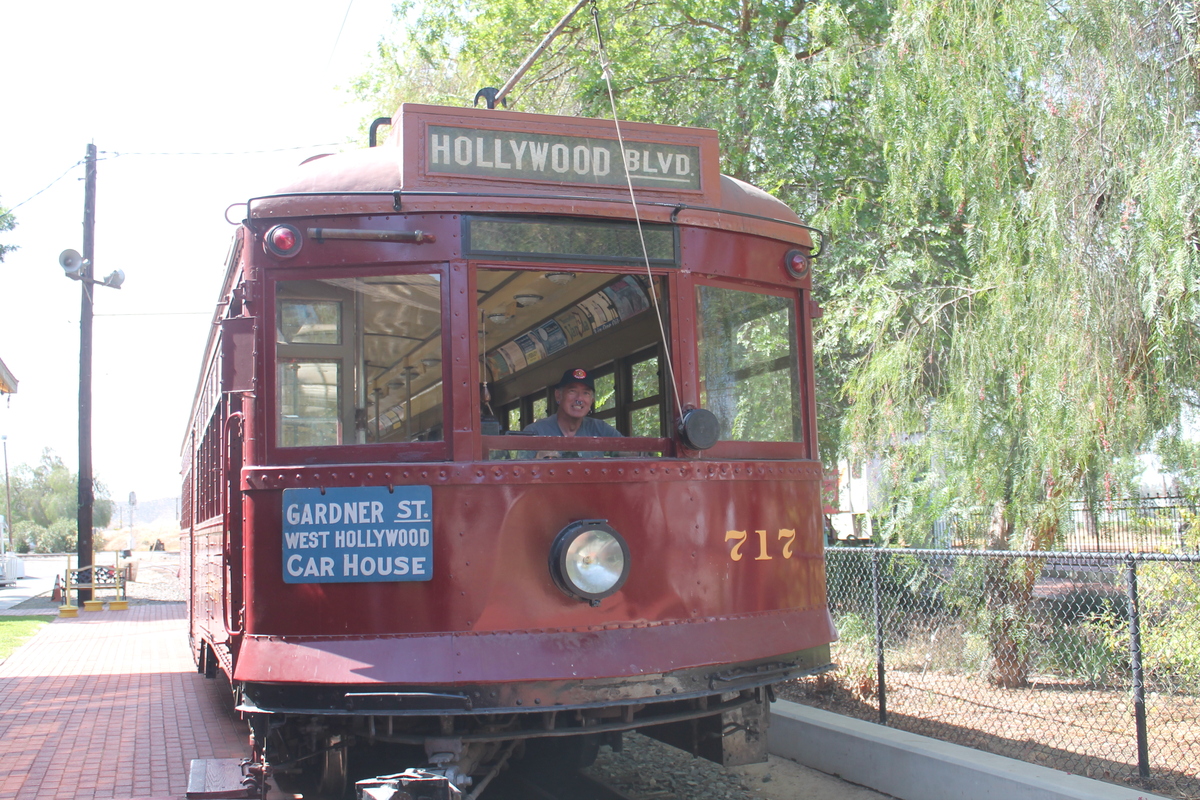
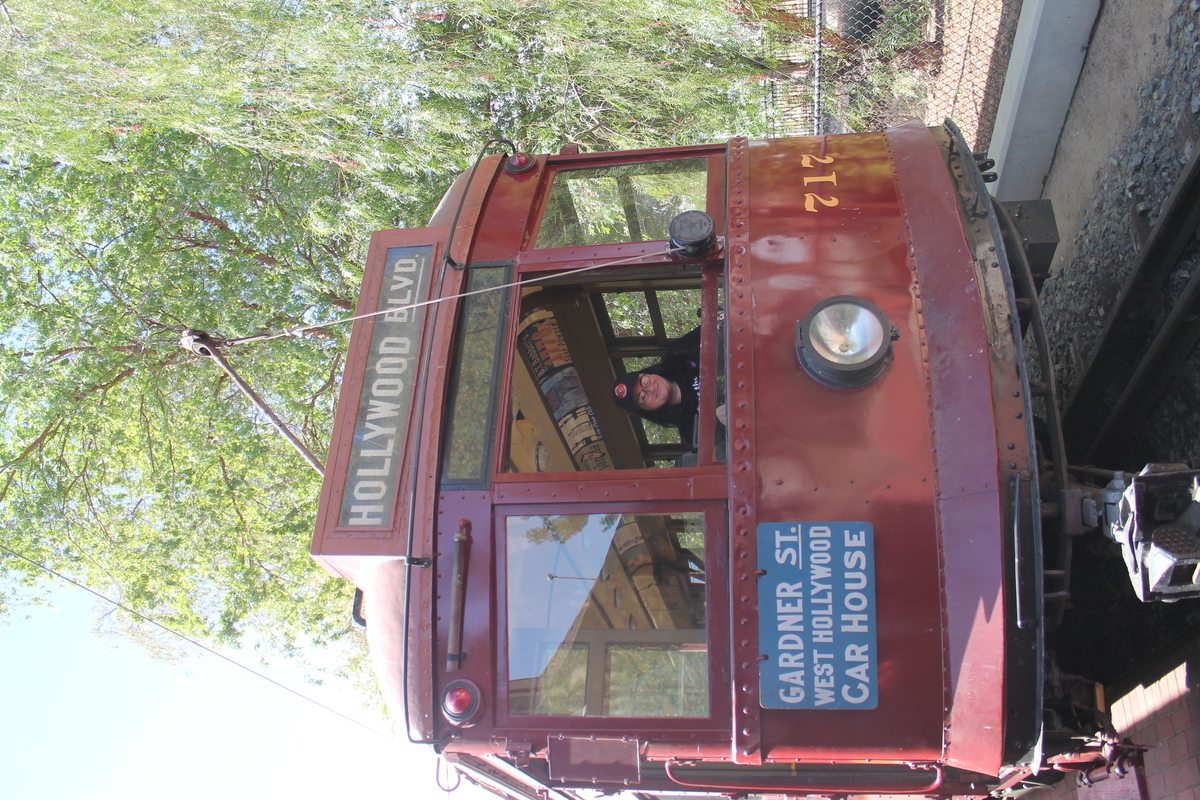
They have two operational examples of the Pacific Electric Red Cars, so I made arrangements for us to have a one-hour session in each of them. That way, we could both drive and ride in each of the two cars.
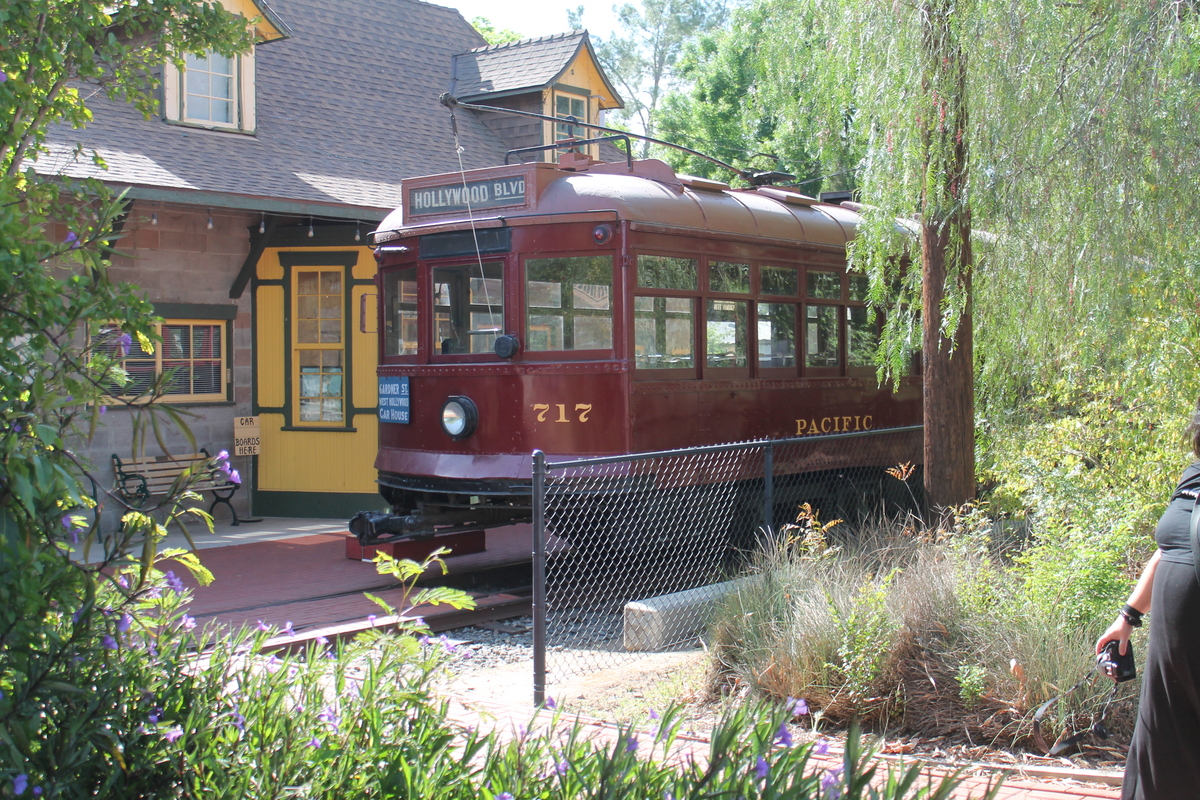
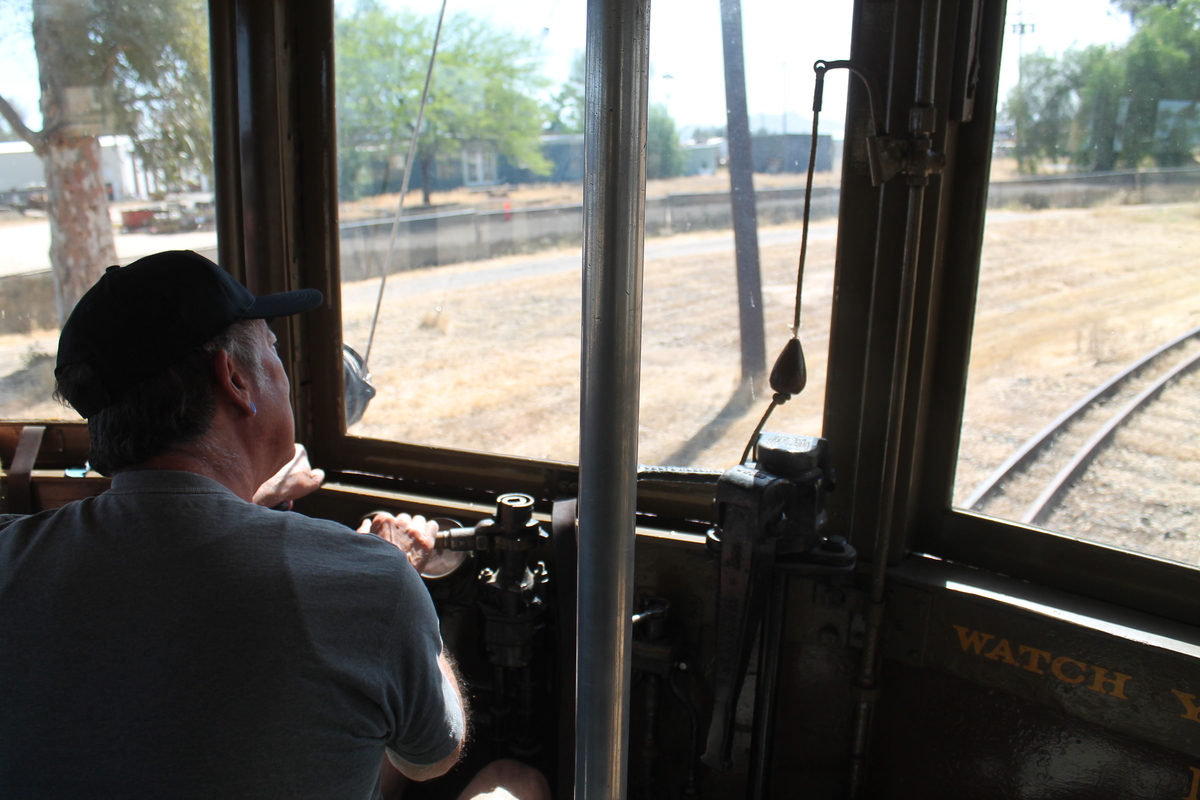
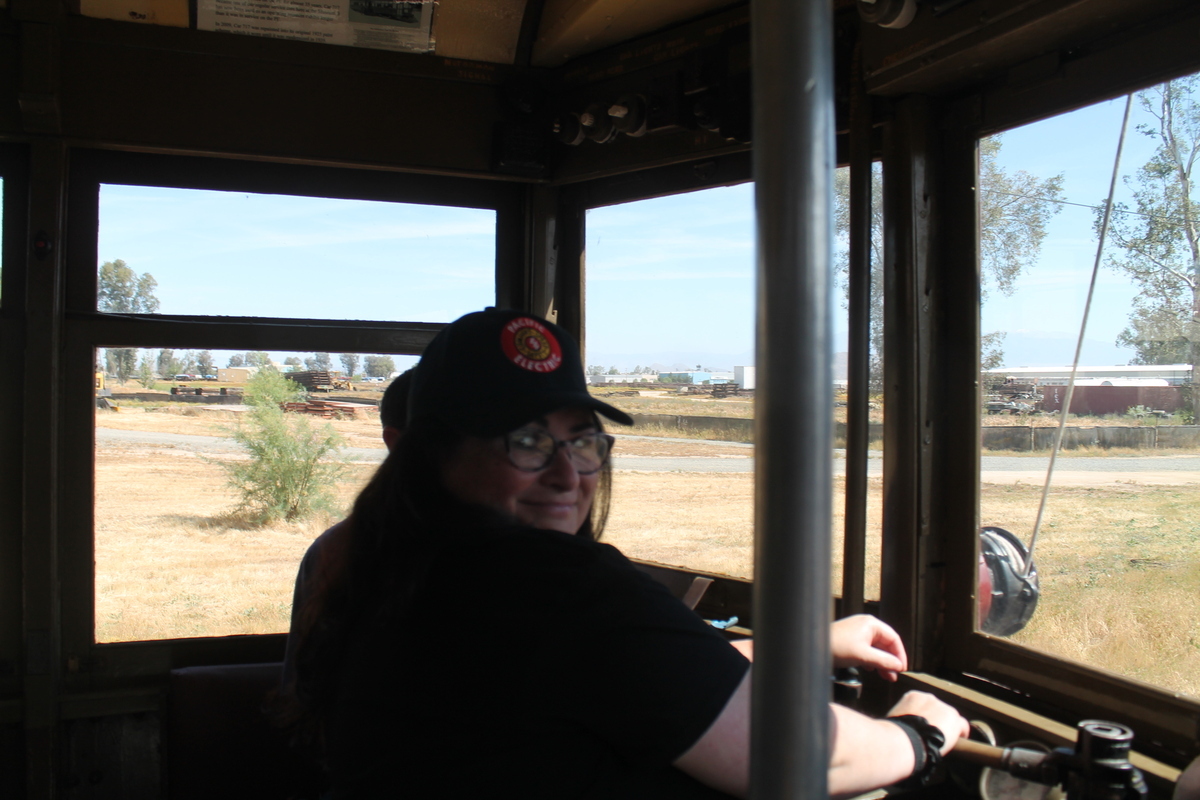
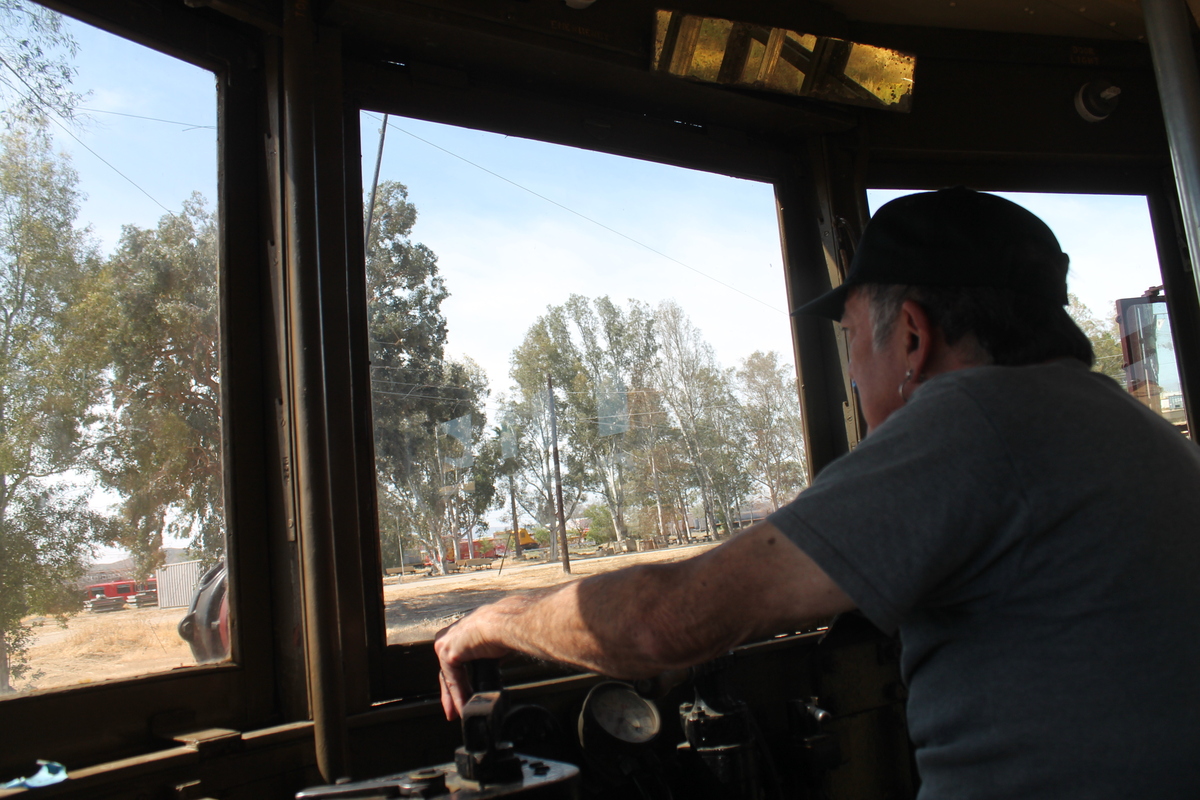
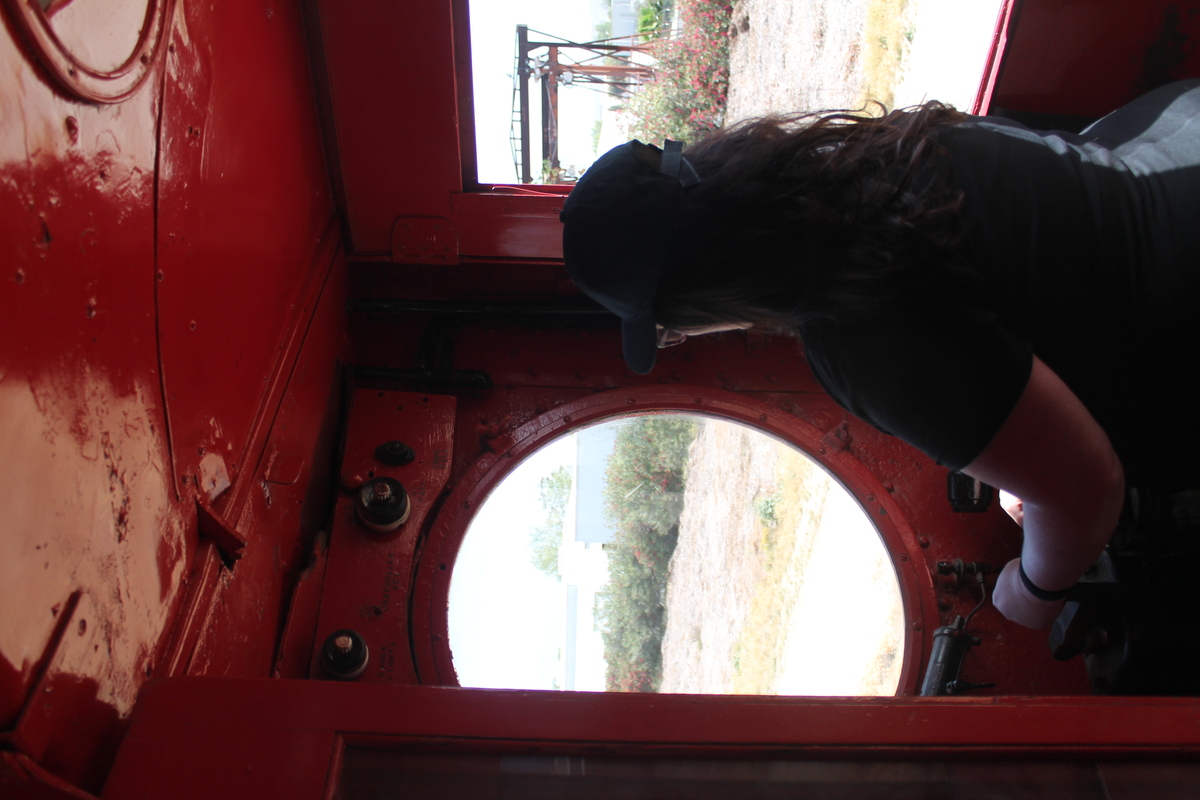
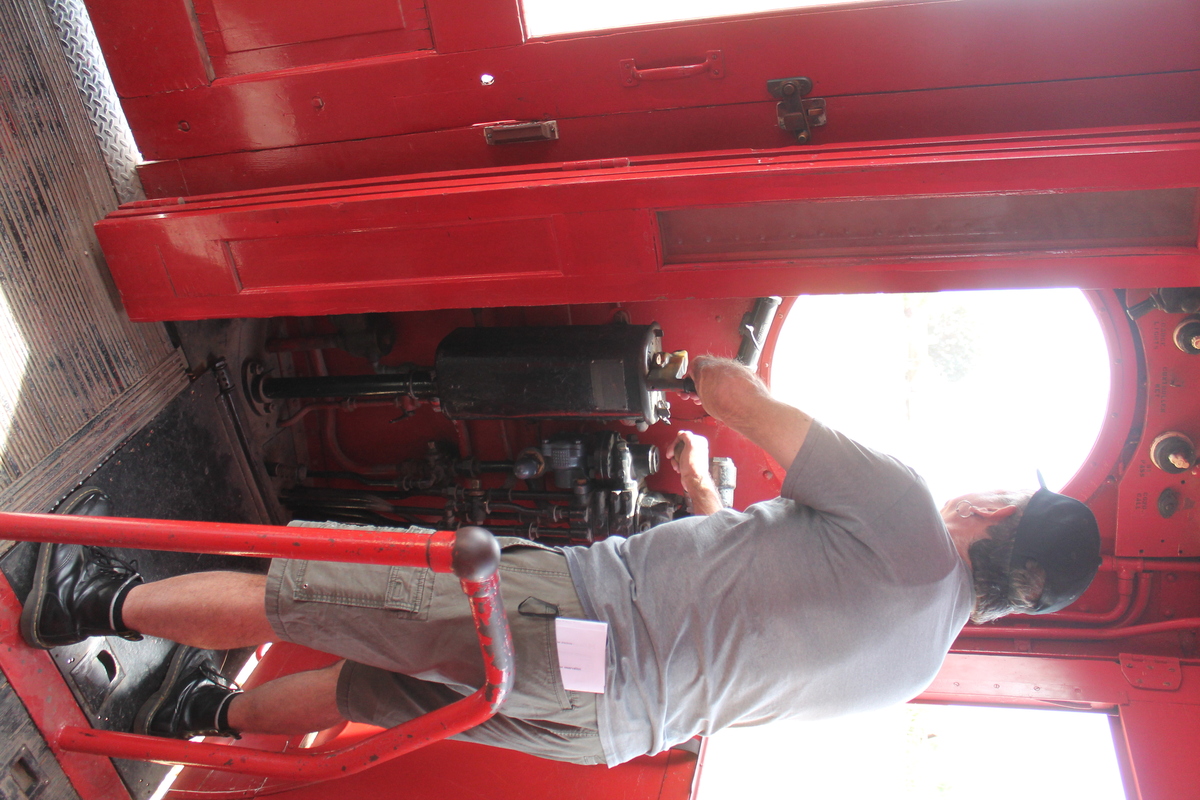
First up was the 717 “Hollywood” car. They had set it up on the loop track around the museum grounds. We were met by Carson, who is in charge of maintaining the Red Cars. He gave us a short tutorial about how to operate the car, and took us once around the loop. After that, it was my turn to drive. I ran the car a few times around the loop, which was a fun little experience. Then Sandi had a turn to drive it. And before long, our first hour was up, and it was time to move on.
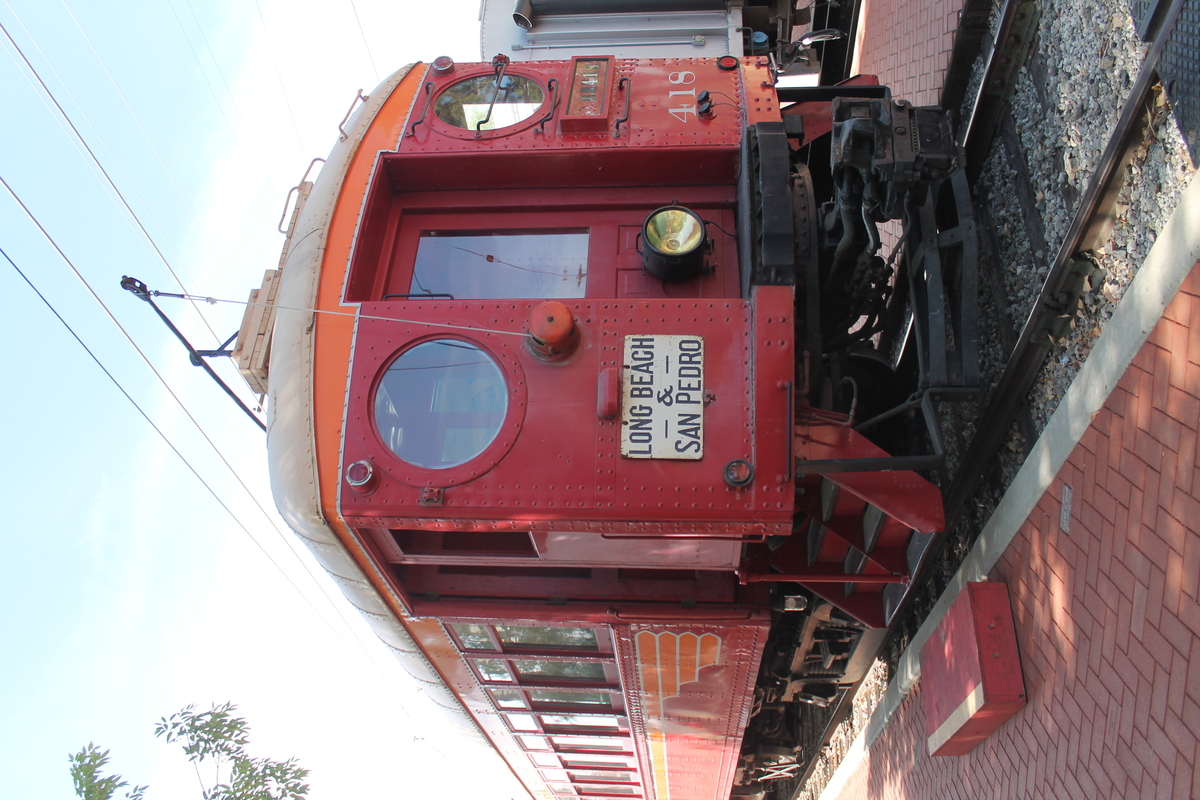
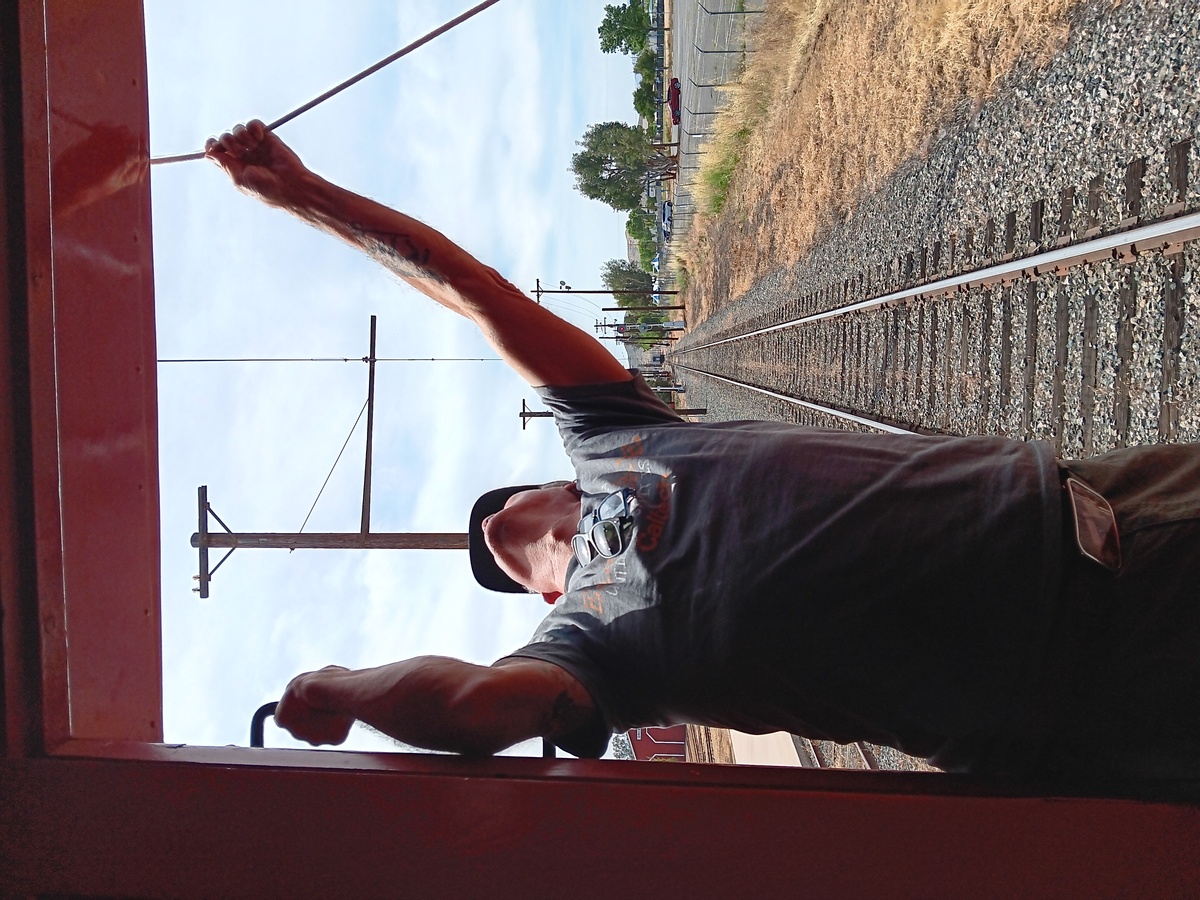
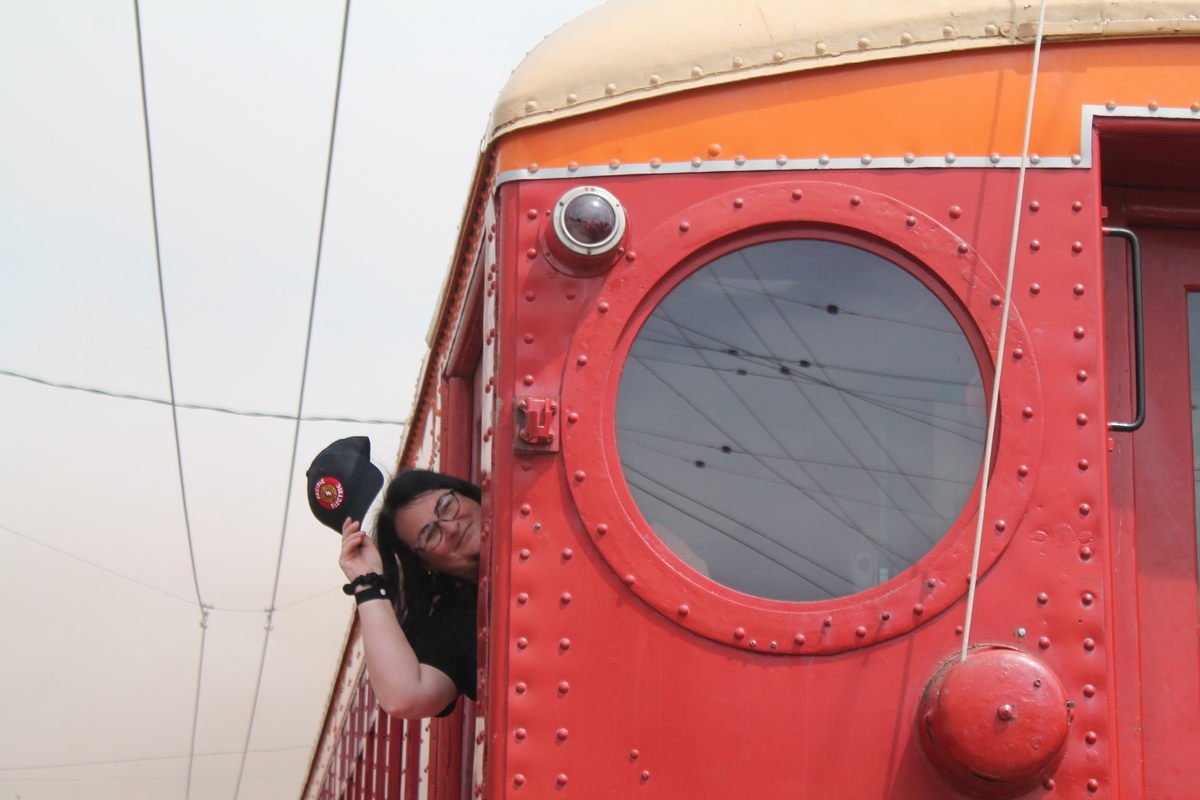
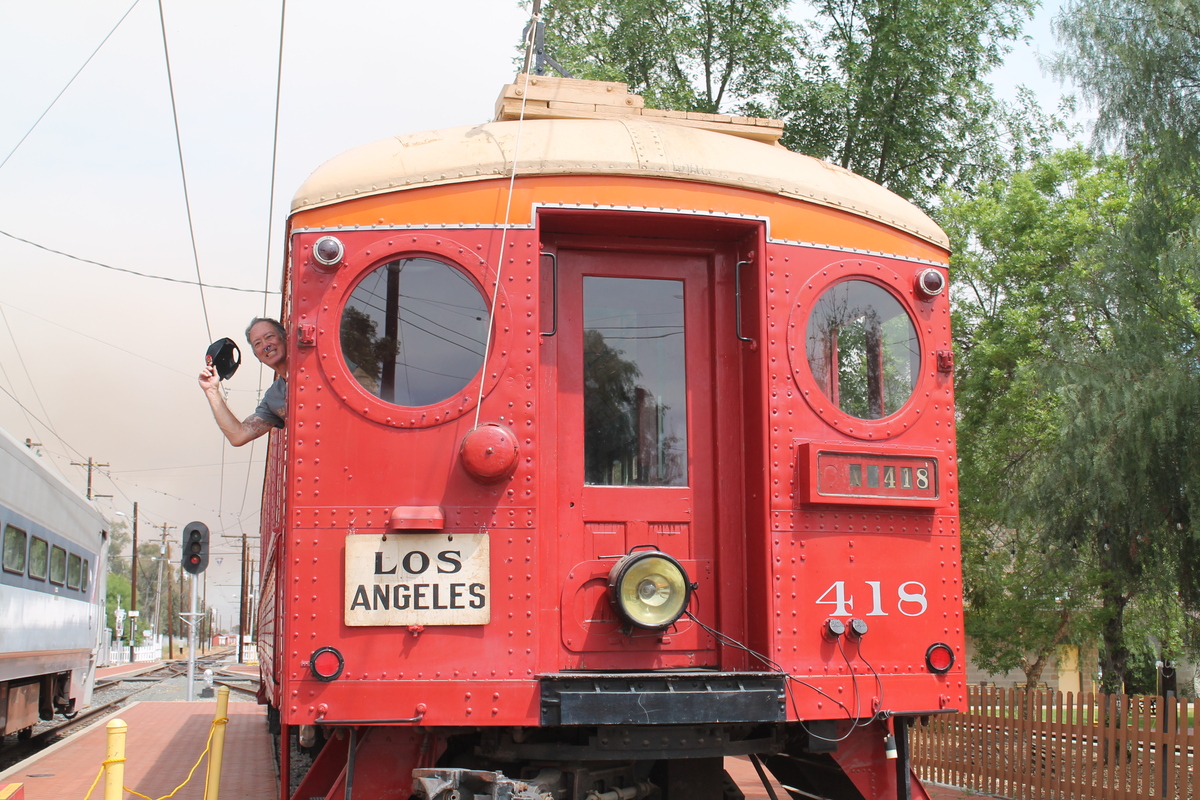
The second Red Car was the 418 “Blimp” car, so-called because it was much larger than the 717. It was set up for us on the “main line” track, which is about a half-mile of straight track. We got the tutorial on how to operate it, and Sandi took the first turn. At then, we had to turn around, which involved setting the car up to run in the opposite direction. We had to put the pole on the back end of the car up on the wire, and bring the front pole down. I was able to put the pole on the wire, but I couldn’t see the hook to on the roof to stow the pole we took down, so Carson had to help us out there. Turning the car around also involved closing and opening valves for the air brakes, and moving the brake handle and operator’s key to the other end of the car. We drove it back and forth several times, and it was an interesting experience.
Each car had a “dead man” switch that had to be held down all the time the car was in motion. The throttles and brakes felt very different on the two cars, so driving each one was a distinctly different experience.
Overall, this was a fun little adventure, and I’m glad to have done it. Also glad to have found something that Sandi hadn’t already done, and to help her to have the chance to do it.